
Case Study
Superior Vision
Provider Portal
Redesigning the secure provider portal for a national vision care plan — from a fragmented legacy system to a self-serve platform that supported a billion-dollar acquisition.
1B+
METLIFE ACQUISITION VALUE
4
DISTINCT USER TYPES
Millions
MEMBERS & PROVIDERS
HIPAA
PII COMPLIANT
CLIENT
Superior Vision
SECTOR
Healthcare / Managed Vision Care
The Challenge
A Platform Built for Four Audiences — With One Broken Experience
Superior Vision had been a leader in managed vision care since 1993, providing routine PPO vision plans to employers across the nation. Their provider portal served four distinct user types — members, providers, employers, and internal staff — but the legacy system had never been built to serve them distinctly. A Flash-dependent homepage offered icon-based navigation with no clear task direction, and providers were abandoning the portal for the phone.
“With a MetLife acquisition on the horizon, the stakes were high. The platform needed to demonstrate scalability, compliance, and user confidence to a billion-dollar buyer — not just look better.”
I led the requirements gathering and redesign effort with HIPAA compliance and PII protection as non-negotiable constraints throughout every phase.
My Approach
Mapping Four User Types to One Coherent Platform
- Multi-audience requirements elicitation — Gathered and documented requirements for each of the four user groups, covering eligibility verification, authorization workflows, claims submission, and self-service support — surfacing conflicts and overlaps across user roles.
- Permission matrix & compliance documentation — Defined what each user type could view, create, and modify. Documented HIPAA-aligned permission rules as functional requirements to ensure PII was protected throughout.
- Pain point analysis — Worked with providers and members to map the specific friction points driving portal abandonment. Key finding: users couldn’t identify their workflow path from the homepage, and high-frequency tasks were buried behind excessive navigation steps.
- UX redesign — Translated requirements into a redesigned homepage that surfaced each of the four user type pathways immediately, replacing the Flash intro with clear, task-oriented navigation anchored in user research.
- Developer collaboration & compliance validation — Partnered with the development team to ensure correct implementation of HIPAA-compliant data handling across all form submissions and views.
Key Deliverables
What I Produced
- Multi-audience requirements elicitation — Gathered and documented requirements for each of the four user groups, covering eligibility verification, authorization workflows, claims submission, and self-service support — surfacing conflicts and overlaps across user roles.
- Permission matrix & compliance documentation — Defined what each user type could view, create, and modify. Documented HIPAA-aligned permission rules as functional requirements to ensure PII was protected throughout.
- Pain point analysis — Worked with providers and members to map the specific friction points driving portal abandonment. Key finding: users couldn’t identify their workflow path from the homepage, and high-frequency tasks were buried behind excessive navigation steps.
- UX redesign — Translated requirements into a redesigned homepage that surfaced each of the four user type pathways immediately, replacing the Flash intro with clear, task-oriented navigation anchored in user research.
- Developer collaboration & compliance validation — Partnered with the development team to ensure correct implementation of HIPAA-compliant data handling across all form submissions and views.
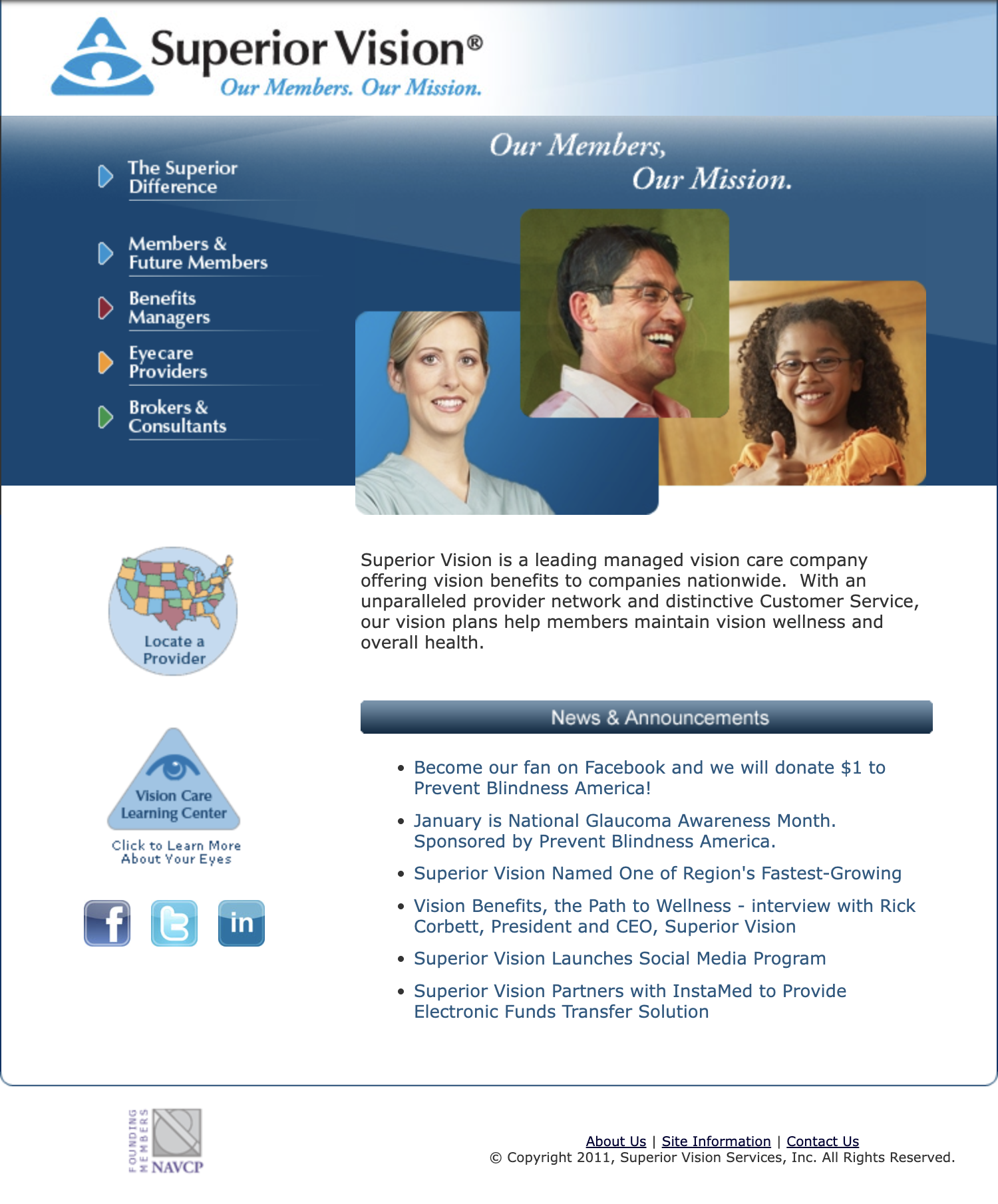
Old version of Superior Vision website lacked compliance, user cconfidence, and scalibility.
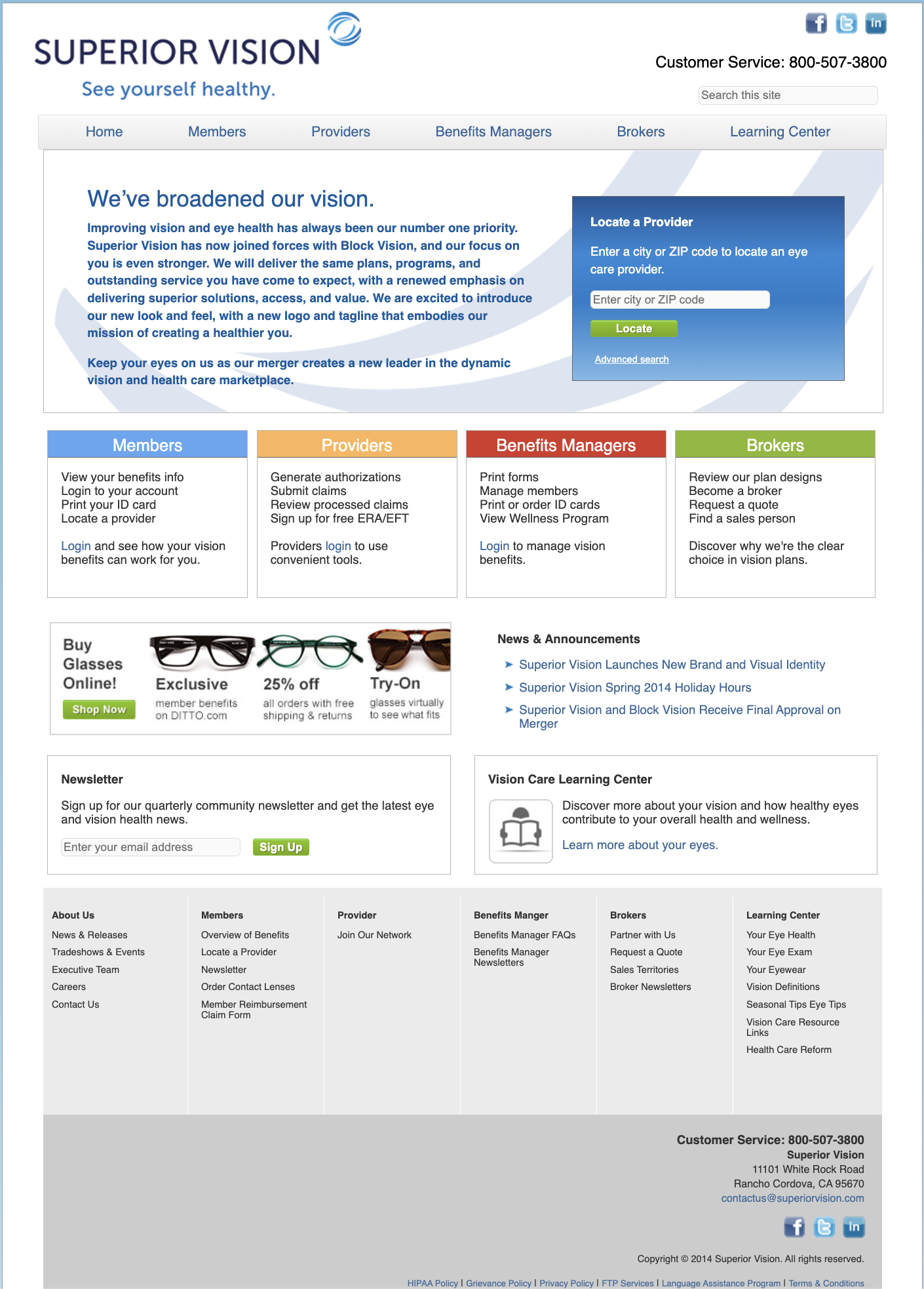
The updated version allowed systems to connect via API to other insurance providers to streamline customer engagement.